
For the first time since 2022, the average 30-year fixed mortgage rate has dipped below 6%, landing at 5.99%.That number isn’t just symbolic — it meaningfully changes affordability,

Dated: February 24 2026
Views: 87
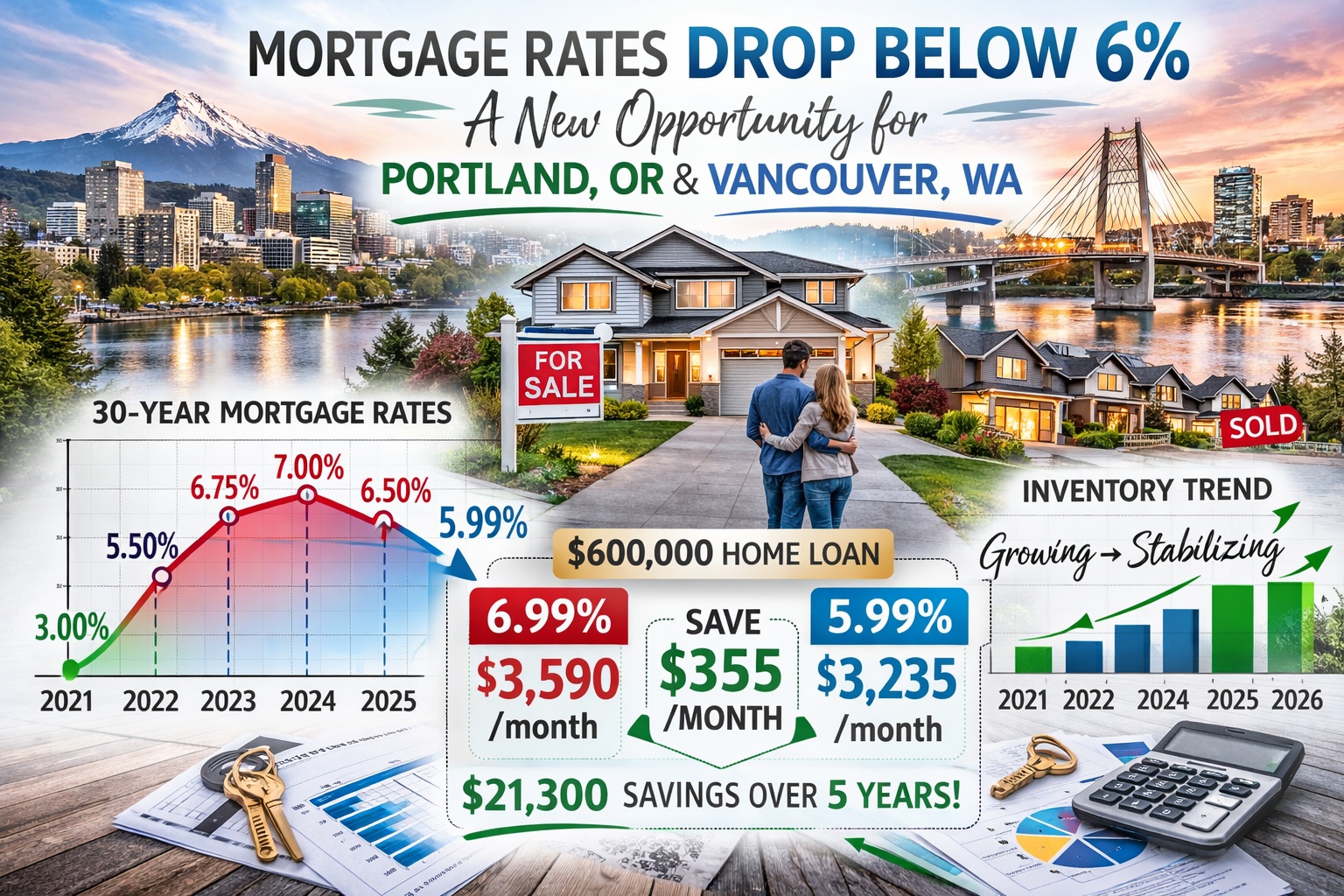
For the first time since 2022, the average 30-year fixed mortgage rate has dipped below 6%, landing at 5.99%.
That number isn’t just symbolic — it meaningfully changes affordability, buyer psychology, and likely market activity across Oregon and Southwest Washington.
After nearly two years of 6.5%–7.5% mortgage rates slowing demand, this move below 6% could be the catalyst that re-energizes both buyers and sellers heading into the next market cycle.
Let’s break down why this matters locally.
Below is a simplified 5-year rate snapshot showing how dramatically financing costs have shifted:
| Year | Average 30-Year Fixed Rate |
|---|---|
| 2021 | ~3.00% |
| 2022 | ~5.50% |
| 2023 | ~6.75% |
| 2024 | ~7.00% |
| 2025 | ~6.50% |
| 2026 | 5.99% |
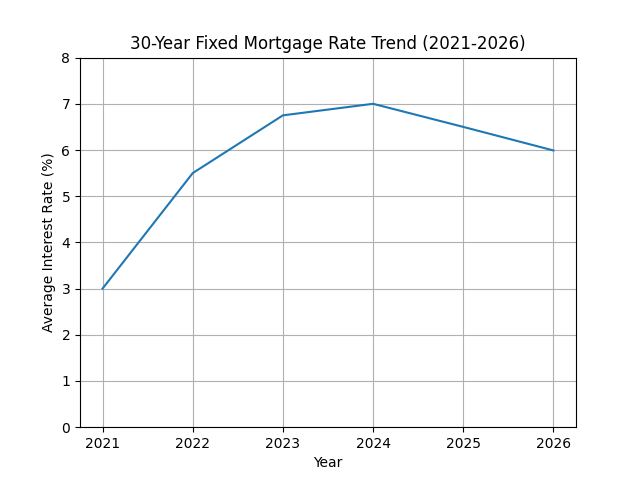
The jump from 3% to 7% nearly doubled borrowing costs. Now, even a 1% improvement creates meaningful payment relief.
Let’s compare a realistic purchase scenario in the Portland/Vancouver metro:
Purchase Price: $600,000
Down Payment (10%): $60,000
Loan Amount: $540,000
Loan Type: 30-Year Fixed
Principal & Interest: ≈ $3,590/month
Principal & Interest: ≈ $3,235/month
≈ $355 per month
≈ $4,260 per year
≈ $21,300
That’s not a small number. That’s a car. That’s a renovation budget. That’s real financial breathing room.
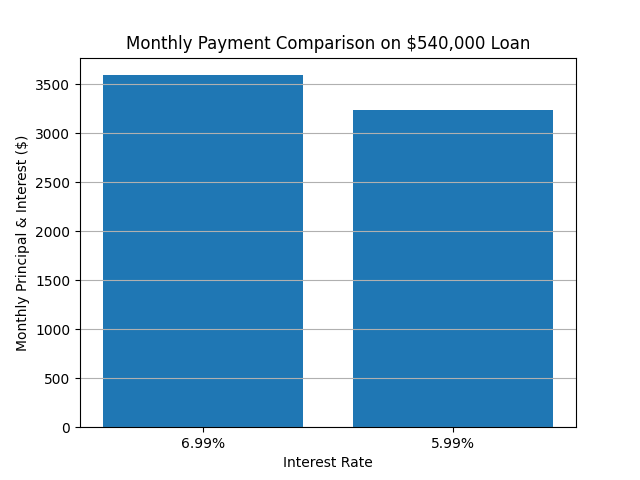
(Bar 1 = $3,590 at 6.99% | Bar 2 = $3,235 at 5.99%)
Psychologically, buyers respond strongly to payment shifts more than rate shifts. A $300–$400 monthly swing often determines whether someone moves forward.
Over the past 12–18 months, both Oregon and Washington saw inventory levels increase compared to the ultra-tight pandemic era.
Homes sat longer. Buyers negotiated more. Sellers adjusted expectations.
However, three factors suggest inventory growth may slow — or even reverse:
Many homeowners secured 2.75%–3.50% loans in 2020–2021. Even at 5.99%, moving still increases their rate. That keeps supply constrained.
New housing starts in Oregon and Southwest Washington have cooled from peak levels. Fewer new builds coming online limits future supply.
Historically, when rates drop:
Buyers re-enter first.
Listings lag.
Inventory tightens.
If sub-6% rates hold, we could see absorption increase quickly across the metro.
Oregon was ranked the #1 most moved-to state in 2025.
Inbound migration continues to support long-term housing demand in:
Portland metro
Lake Oswego
West Linn
Tualatin
Wilsonville
Oregon City
Even modest net migration matters in markets where housing supply has historically lagged population growth.
Steady inbound demand + slowing new construction = strong long-term price support.
The Vancouver market continues to benefit from:
No Washington state income tax
Close proximity to Portland employers
Relative affordability compared to many inner Portland neighborhoods
When rates decline, cross-river buyers who paused often re-engage quickly.
Clark County inventory could tighten faster than expected if demand rises this spring.
| Year | Inventory Trend |
|---|---|
| 2021 | Historic lows |
| 2022 | Extremely tight |
| 2023 | Slight improvement |
| 2024 | Moderate growth |
| 2025 | Healthier supply levels |
| 2026 | Likely stabilization |
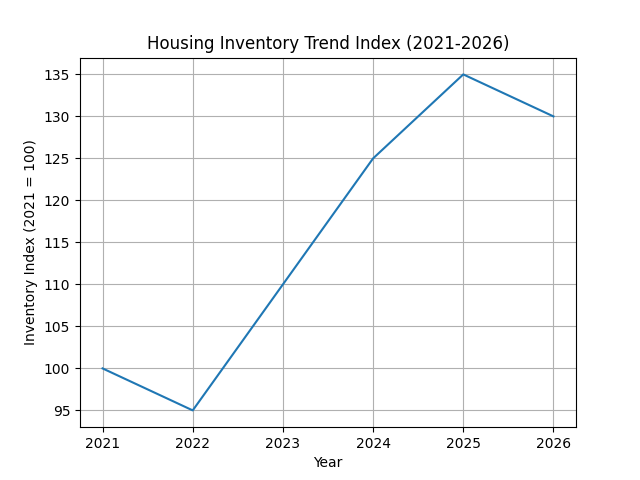
We are no longer in an extreme seller’s market — but we are also far from oversupply.
If 5.99% holds or improves:
Buyer showings increase
Pending sales rise
Days on market decline
Seller concessions shrink
Prices stabilize or appreciate modestly
We likely won’t return to 2021 frenzy — but we could enter a healthier, competitive balance.
Your payment just improved meaningfully.
Inventory is better than two years ago.
Competition hasn’t fully returned.
That window may not stay open long.
Demand is waking up.
Migration trends support long-term stability.
If buyer activity outpaces listing growth, leverage improves.
Timing matters — and this rate shift could be the turning point.
A drop to 5.99% isn’t just a headline.
Compared to 6.99%, it can mean:
$355 less per month
Over $21,000 in five years
Increased buyer qualification power
Renewed market momentum
For the Portland and Vancouver metro markets, this could mark the beginning of the next active phase.
If you’re considering buying or selling in the next 6–12 months, this is the moment to evaluate your strategy before competition intensifies.
A shift from 6.99% to 5.99% can mean:
✔ Hundreds less per month
✔ More buying power
✔ Stronger offer positioning
✔ Faster market activity
But timing matters — and every neighborhood behaves differently.
If you're considering:
• Buying your first home
• Moving up
• Downsizing
• Relocating across the river
• Selling in the next 6–12 months
Let’s build a strategy based on your numbers, not headlines.
We’ll cover:
Your payment scenarios at current rates
Local inventory trends in your target neighborhood
Pricing strategy if you’re selling
Timing strategy for 2026 market conditions
👉 Book your free consultation here:
Free Consult Link: Click Here

I’ve been a licensed real estate agent for over 12 years, helping clients navigate the buying and selling process with confidence and clarity. Over the years, I’ve gained the experience an....
For the first time since 2022, the average 30-year fixed mortgage rate has dipped below 6%, landing at 5.99%.That number isn’t just symbolic — it meaningfully changes affordability,
What Federal Funds Rate Cuts Mean for You as a Home Buyer or SellerIf you’ve been following the news, you’ve probably heard a lot of talk about Federal Funds rate cuts — and just
Credit Score Myths, Mortgage Changes, and What Homebuyers in Oregon & SW Washington Need to Know..When it comes to credit scores, there are a lot of long-standing myths and misunderstandings
It’s shaping up to be a classic Pacific Northwest weekend—expect some scattered showers on Sunday but daytime highs in the 60's. No matter what there’s no shortage of fun across
Should you require assistance in navigating our website or searching for real estate, please contact our offices at 503-266-3657.
 All information provided is deemed reliable but is not guaranteed and should be independently verified. IDX information is provided exclusively for consumers' personal, non-commercial use, that it may not be used for any purpose other than to identify prospective properties consumers may be interested in purchasing, and that the data is deemed reliable but is not guaranteed accurate by RMLSTM.
The content relating to real estate for sale on this web site comes in part from the IDX program of the RMLSTM of Portland, Oregon. Real estate listings held by brokerage firms other than Equity Oregon Real Estate are marked with the RMLSTM logo, and detailed information about these properties includes the names of the listing brokers. Listing content is copyright © 2026 RMLSTM, Portland, Oregon.
This content last updated on September 19, 2026 7:59 PM UTC at 4 AM. Some properties which appear for sale on this web site may subsequently have sold or may no longer be available.
All information provided is deemed reliable but is not guaranteed and should be independently verified. IDX information is provided exclusively for consumers' personal, non-commercial use, that it may not be used for any purpose other than to identify prospective properties consumers may be interested in purchasing, and that the data is deemed reliable but is not guaranteed accurate by RMLSTM.
The content relating to real estate for sale on this web site comes in part from the IDX program of the RMLSTM of Portland, Oregon. Real estate listings held by brokerage firms other than Equity Oregon Real Estate are marked with the RMLSTM logo, and detailed information about these properties includes the names of the listing brokers. Listing content is copyright © 2026 RMLSTM, Portland, Oregon.
This content last updated on September 19, 2026 7:59 PM UTC at 4 AM. Some properties which appear for sale on this web site may subsequently have sold or may no longer be available.


